Author: Josh

Caveat Venditor

New York has always been a culturally dynamic city, but certain neighborhoods have generally been able to maintain their character over the years. To some extent people follow reputations; once an area establishes an identity it is likely to attract those who find such an area attractive, thus perpetuating the status quo. Economics likely play a larger, but related role, in that certain neighborhoods may attract diversity due to cheaper rents while others will be more exclusive due to the high costs. But even the formerly inoculated communities have been finding that as the economies change, so goes the neighborhood.


Yamim Noraim Roundup – 5768

A few odds and ends today from non-work life:

  • Last night I posted my Rosh Hashana derasha which was a fun challenge to write and deliver. R. Schnaidman gave me a time range of 30-35 minutes which is normally beyond how long I can talk, so for the first time in many years I had written out most of it beforehand and spoke both from the sheets and extemporaneously. Feedback was positive, though one person asked if it was intentional that I didn’t cite any Zohar or Ba’al Shem Tov.

    I said yes, and politely explained that I was following my mesorah. After all, it was Rosh Hashana…

  • As certain individuals know, we had some now resolved issues with my landlord. Apparently, lots of other people had worse experiences: there’s a class action suit against them.
  • I know this is late for Rosh Hashana, but this song seems relevant (music starts at 2:18) even if it doesn’t count as an official zemer.
  • Speaking of simmanim, the line between what is an innocuous simman and outright avoda zara is somewhat complicated. I gave a shiur on it some time ago, and based on far too many conflicting sources, couldn’t reach a definitive conclusion. I did conjecture that the degree of seriousness which one takes these simmanim is likely proportional to the potential issur, with the litmus test being how one one would feel if the simman wouldn’t be performed. For example, R. Tendler once told us that a woman came to him Erev Yom Kippur looking for a chicken to do kapparot because if she didn’t, she would die that year. That, he said, was avoda zara.

    Regarding the simmanim of Rosh Hashana, I’m beginning to think that most are fine given that most are simply puns – some even bilingual puns. In other words, they seem more for entertainment purposes rather than a magical act. For another R. Tendler example, I first heard from him the one “lettuce, half a raisin, celery” = let us have a raise in salary.

    If you still take these seriously, then in addition to avoda zara problems, you likely have no sense of humor – which could pose problems when people start calling you an idol worshiper.

  • In what should some as no surprise, I don’t do kapparot following Shulhan Aruch’s admonition that it’s darkhei emori. I also have never been a fan of tashlich especially since a former Hindu co-worker once asked me, “what was that thing where you pray to the river.”

    However, for efficiency’s sake I suggest that next year we could work on combining the two practices during the asseret yemei teshuva by simply flinging chickens into the water – perhaps even feeding them bread first. I’m sure God would really appreciate that much more than doing them separately as it would double the mehillah power.

  • And on a more serious note, through a great set of hashgachic circumstances (and the ubiquitous chords directory I will soon be teaching an Introduction to Jewish Guitar. Even with some nervousness, I’m really looking forward to the entire experience which I hope to recount afterwards.

If I don’t post before Yom Kippur, Gemar Tov to all. Looking back at what I last year I don’t think I can even hope for less erratic blogging given my new work schedule. Despite the infrequent or sporadic posting, we still had an eventful year with preliminary thoughts and detailed rebuttal of the Conservative Teshuva on Homosexuality and the aftermath, a conflict and conversation in Washington Heights, the RCA’s gerut policies, and of course, the Negiah.org fiasco. However, I can and still will ask forgiveness if I have inadvertently or unnecessarily offended people through carelessness or laziness. Although I do stand by what I write I freely admit everything could use more editing, not just for typos, but for tone or imprecise syntax.
Naturally I have no idea what the next year will bring, but I do hope to at least maintain the status quo of quality (if not quantity). Thanks again for reading, commenting, and reminding me why I’m still at this nearly five years later.1
Shana Tova,
Josh
Update: I will be sans computer for a few days while it’s being repaired, and as such may be slower in responding to e-mails or the like.

1. Yep, it’s been that long; the forthcoming retrospective should be fun.


Passing Judgement, Bypassing The Judge

Delivered with some variations between Minha/Maariv on 1 Tishrei 5768 at Mt. Sinai Congregation
First let me take this opportunity to wish everyone a Shana Tova, a good new year.
I’m sure that by now most of us are familiar with our traditional formula of Rosh Hashana. We stand before God in judgment. We reaffirm his kingship over us, ask him to remember us favorably, and sound the shofar in anticipation of redemption. We may also be familiar with our tradition’s dramatic narrative of the day. We pass before God like sheep to be judged individually. We have our spiritual accusers and defenders, though according to the Talmud we can confound our accuser by varying the shofar blasts (B. Rosh Hashana 16b). Based on our merits or shortcomings, on Rosh Hashana our fates for the year are written, and on Yom Kippur they are sealed (B. RH 16a).


Rating The Rides

In light of the recent subway outage I actually decided to fill the MTA’s rider report cards for the trains I take most frequently. Overall I’m not terribly impressed with the A’s sporadic service especially during off hours, but I’ve generally found the 2-3 and 4-5-6 to be pretty efficient.
A better question would be if the MTA actually takes these things seriously since there is little incentive to improve. In free market economies competitions drives innovation and a greater concern for customer service as dissatisfied consumers would simply take their business elsewhere. But for many New Yorkers, the MTA is the only realistic option for transportation. Cars are too expensive with purchasing, ownership, insurance, and parking. Cabs and car services are not only expensive but their service is unpredictable depending on the neighborhood. Bicycles are a cheaper alternative, but are more dangerous, require physical stamina, and are impractical for transporting packages. We also cannot ignore the elderly population, many of whom are physically unable to drive or bike or are on fixed incomes and could not afford the other alternatives. Because of people’s dependence on public transit, the MTA could hike fares with only political opposition as opposed to facing a consumer revolt.
Furthermore, I’m skeptical how much the MTA can improve its service. Aside from management being politically motivated, the reliance on union labor and its regulations ensures that even mediocre (or incompetent) employees will be overpaid for as long as possible (not to mention pension obligations).
My guess is that just like every other year the NYPost and Daily News will write a few stories on the pluses and minuses of each line, there will be editorials bemoaning the negatives and life will go on as usual. Then again New Yorkers are never shy about sharing their opinions – usually unsolicited – so go ahead and let them know what you think.
Bonus: Try filling one out in Hebrew or Yiddish.


Speaking on the UWS

This Shabbat I will be speaking once again at Kehilat Rayim Ahuvim on the Upper West Side. The topic will be “The Seven Stages of Consolation” – the first of which I covered regarding Nachamu but will be expanding the theme through more of the shiva dinehemta. True, it’s not quite as irreverent as “Existential Teshuva And The Incredible Hulk,” but it should be no less interesting.
Davening times permitting, it’s called for 11:15 AM at 241 West 72nd Street, 2nd Floor.


A Long Strange Trip

“And that,” put in the Director sententiously, “that is the secret of happiness and virtue – liking what you’ve got to do. All conditioning aims at that: making people like their inescapable social destiny.” Aldous Huxley – A Brave New World p. 16

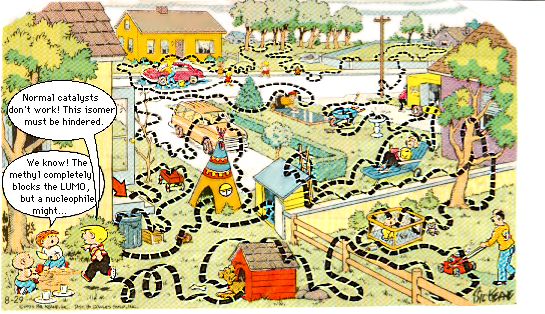
Like most New Yorkers, I’ve had what could best be described as The Commute From Hell. Thanks to a tornado assisted torrential rain it took me about 5 hours to get from 184th and Bennett to 4 New York Plaza. Normally this is a simple matter of taking the A-Train to Broadway Nassau/Fulton and then the 4/5 to Bowling Green and it takes about 45-50 minutes.
Today’s commute reads more like like one of Billy’s adventures in
Family Circus:

  1. A-Train from 181st stop gets stuck underground for 30-45 minutes, finally reaching 145.
  2. I head topside at 145 to see how the buses are running. After some waiting there I head back down into the subway where the train from which I had disembarked is still parked.
  3. A-Train goes local until 110 or so. I get fed up and walk a few avenues to the 1 line
  4. The 1 not faring much better, I walk to 96th street to hedge bets with the 2/3.
  5. Turns out that line is messed up too, so I take a crosstown bus to try the east side.
  6. Pick up the 6 at 96th and Lex.
  7. Due to the flooding at 59th street, the 6 stops at 68th street prompting a transfer to the N line.
  8. From the N I transfer one more time to pick up the R.
  9. R goes to Whitehall Station which is a block or so from the office

Keeping in mind that all this included numerous delays, slow running trains, packed corners, and hot muggy weather. Total time: just under 5 hours.
Still a few good things came out of it. For one, between both commutes I started and finished Aldous Huxley’s dystopian tale A Brave New World. And keeping a positive attitude during this trek, I did get to meet a whole slew of interesting people whom I’d otherwise have ignored from bankers, lawyers, to a Hofstra PhD student. As a whole people seemed exasperated, but some in better spirits than others. But while I was imagining a transit strike under Bloomber’s theoretical congestion pricing scheme, I was also privy to some of my fellow commuters erudite discourses of civil engineering and political theory, featuring such profundities as “these guys are all morons” and “this is f—ing bulls—t” (an apparent consensus).
O brave new world that has such people in it, indeed.


On Turning 30


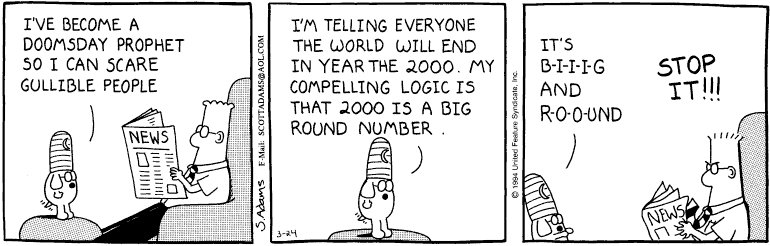
There’s something about round numbers that affects people as if the presence of a 0 in the one’s place necessitates additional introspection. To some degree there is a practical element since we tend to count in base 10 so every 10 units serves as a useful metric for evaluation. But in the context of age, our culture attributes certain societal values and expectations to the decades of your life be it 20’s, 30’s, 40’s, etc. such that the turnover can be viewed as an actual benchmark on one’s life. Of these markers, the change from the 20’s to 30’s is perhaps the most significant transition, representing an absolute break from the immaturity of youth to the responsibilities of adulthood.

“Thirty was so strange for me. I’ve really had to come to terms with the fact that I am now a walking and talking adult.” – C.S. Lewis

Depending on one’s personality, this can be particularly depressing. For one it’s likely that no matter who we are we know someone whom we would consider to be “better off” than we are at the same stage, or worse, life may not have met the expectations formulated in our youth. In either case, there can be a sense of lost vitality, opportunity, and idealism. Who we are at thirty is likely who we’ll remain, thus sentencing us to continue our lives as it is – for better, worse, or redundant.

“Life is islands of ecstasy in an ocean of ennui, and after the age of thirty land is seldom seen” – Luke Rhineheart
“The conceptions acquired before thirty remain usually the only ones we ever gain.”
William James

“It is well for the world that in most of us, by the age of thirty, the character has been set like plaster, and will never soften again.” – William James
The boy gathers materials for a temple, and then when he is thirty, concludes to build a woodshed. – Henry David Thoreau
“A poet more than thirty years old is simply an overgrown child.” – H.L. Menckin
However, not everyone is content to go gently into that good afternoon. As Julie Lynem writes:

No one has all of the answers or reaches every goal. The important thing is to keep striving toward one.
So you’re not where you thought you would be at 25, 35, 55 or 65? Everyone’s life plan deviates off course at some point. What matters is that we make the most of the journey.
Now that I’ve turned 30, I’m no longer afraid of what’s in store. Unlike a birthday present, life is not always neatly packaged and tied with a bow.

And indeed some have embraced thirtydom tempering youthful spirit with the maturity from experience. R. Boruch Leff offers more practical compromise:

Indeed, the Talmud (Pirkei Avot 5:26) [sic]1 declares: “At age 30, one receives strength.” This is the strength of character needed to pursue life’s goals. The 20s process of trial and error leads to a more secure decade of the 30s, when a person is focused on true talents, pursuable goals, and genuine accomplishments.
The old cliche is true: A jack-of-all-trades is a master of none. The 20s are the training ground to become a jack-of-all-trades. The 30s is the time to focus and master those talents that can be applied in practical directions.

Of these comments I find R. Leff’s comments resonate the most. For the past several years I’ve been mostly involved in three different worlds: computers, Rabbinate, and academia – with significant subdivisions therein. For each field of which I have been a part I see friends who have chosen and stuck with one career path and often find them successful. Classmates who took tech jobs straight out of college have built up nice nest eggs and moved up the latter to positions of management. Some friends who went the Rabbinic route are established in their own shtellers, and others who did PhD programs are published, delivered papers at conferences, and are either finished with their programs or finishing shortly. Professional development aside, most friends of mine are married, and/or have children, or are otherwise “further along” in their lives and goals.
On the other hand, I’m reminded that life is not about accomplishments as much as it is about living. To quote Vincent Van Gogh:

“I do not intend to spare myself, not to avoid emotions or difficulties. I don’t care much whether I live a longer or shorter time. The world concerns me only in so far as I feel a certain debt toward it, because I have walked on this earth for thirty.”

Of course, Van Gogh later shot himself at thirty seven, but that’s not really the point. Turning thirty I do look back on my life thus far and where I currently am and I’ve realized that despite all the roadblocks and downturns I have been extremely fortunate in many areas of my life. Being a “jack-of-all-trades” has also allowed me to encounter some truly wonderful people. And by being exposed to so many different environments I can approach the world with a particularly unique perspective.
For some people turning thirty represents a psychological change, and for others being thirty is no different than being 29 and 364 days old. I don’t think for me there has been any immediate change, but I’m must more aware of how I’ve developed personally and emotionally in the past 10 years. And while I would still to be satisfied in a more stable situation, I hope that I will be able to be as open to possibilities and have faith when doesn’t go as expected.
To everyone who has been part of the first thirty years of my journey I thank you. And to everyone whom I have not yet encountered, I am looking forward.
Until the next round number…


1. Actually M. Avot 5:21


The Consolation of Nachamu

Delivered at Mt. Sinai’s seudah shelishit Shabbat Nachamu 2007/5767

After revisiting and recounting the horrors of Jerusalem’s destruction on 9 Av, we begin the process of healing and consolation. To this end, the sages instituted reading the seven haftarot of consolation beginning with Yeshayahu 40 and the appropriate introduction “nachamu, nachamu ami” commonly translated as “comfort ye, comfort ye, my people.” But for those who have experienced tragedy, there is little apparent in this haftara which would be considered comforting. Most of the haftara praises God or extols God’s superiority and might, which for those who experienced the hurban would be hesitant to deny, and few would turn to in times of crisis.


Random Roundup

Nothing major today, just a few interesting links and thoughts:

  • Page Six reports that a movie is in the works covering the rise and fall of electronics retailer Crazy Eddie. Aging New York couch potatoes no doubt remember Eddie’s frenetic commercials – our prices are innnsaaaaaaaaaaannnnne. As it turned out that Eddie Antar was crazy like a fox, fled to Israel and eventually was sentenced to 8 years in prison for massive fraud and assorted SEC violations. Page Six reports that Danny DeVito will play the role of Eddie.
  • Apparently if you try too hard to get out of jury duty, you might wind up facing one yourself. A Cape Cod man is facing charges for making up excuses in the hopes of an exemption. What’s interesting here is that we have a real life case of the classic Liar Paradox

    “I’m frequently found to be a liar, too. I can’t really help it,” Ellis added.
    “I’m sorry?” Nickerson said.
    “I said I’m frequently found to be a liar,” Ellis replied.
    “So, are you lying to me now?” Nickerson asked.
    “Well, I don’t know. I might be,” was the response.

    Ok so he doesn’t know if he’s lying but even if he was, how could he have answered the question? The exchange continues:

    “I have the distinct impression that you’re intentionally trying to avoid jury service,” Nickerson said.
    “That’s true,” Ellis answered.

    Or is it true? There’s just no way to tell. And for the coup de grâce:

    Ellis could face perjury and other charges.

    In other words, Ellis is facing perjury for lying in court when he said he was a liar.

  • Shaya sends in an AP story from today covering the declining state of the Jamaica Bay Wildlife Refuge which we recently visited. The article implies that the marsh is deteriorating due to increased levels of nitrogen from the city. It would be a shame to lose the marsh, even if so few people know it exists. If you’re in the NY area, try stopping by one nice Sunday while it’s still there.